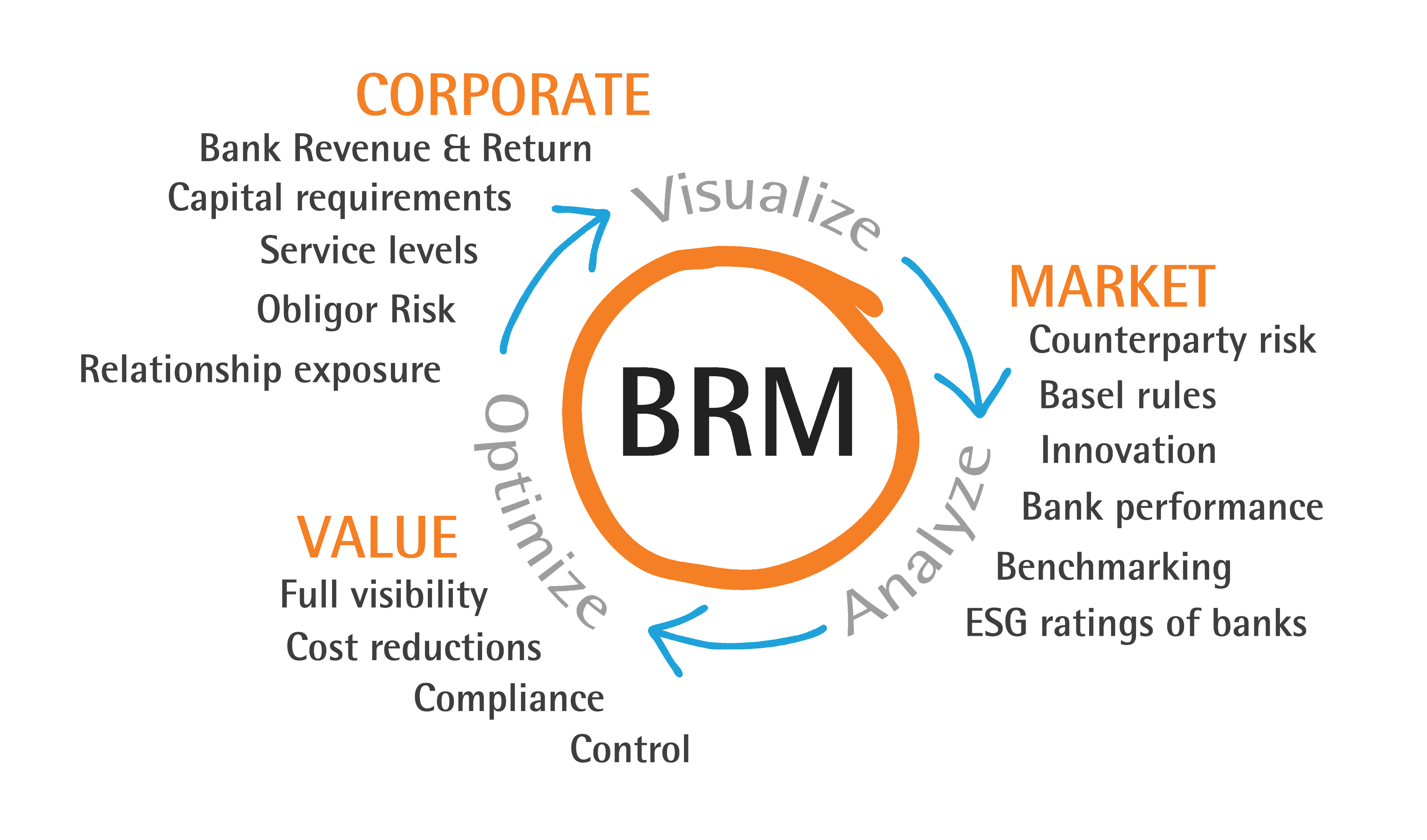
With banking representing a core business requirement, most corporations are engaged in some form of BRM,
mostly supported by manual activities with subsequent cumbersome collaboration, progress measurement,
lacking benchmark data and with limited transparency into the banking environment. BRM is about having at all
times visibility in all bank relationships, on all aspects involved in these relationships, thereby minimizing
risk of disruption of the relationship and maximizing the certainty that financial services are
provided at the appropriate terms and conditions.
BRM covers for requirements such as securing access to funding, market level conditions and bank capabilities.
Corporations are challenged with BRM activities in their daily live in areas such as gaining visibility
on their banking landscape, benchmarking, risk assessments, insuring compliance to corporate banking strategy,
insuring each bank’s fair share of business as well as consistent reporting on banking activities.
BRM covers the monitoring and optimization of bank relationships on an ongoing, structured and consistent manner.
That ranges from contacts with one bank to multiple bank relationship in multiple countries and from having a straight
forward domestic cash management requirements to a range of complex products involving risk taking by the banks.
BRM considers the impact of a host of outside factors such as the volatility in the financial markets, the Basel Accords,
credit rating by the banks, counterparty risk associated to the banks, limitations to bank funding and capability.
Vallstein’s BRM solutions deliver control in the management of the relationships with banks, enable optimization of
portfolio and performance, while reducing risk. Through the use of leading edge technology and benchmarks,
Vallstein BRM Solutions empower corporations to gain full insight and control on their bank relationships, resulting
in substantial business improvements.
One core element of Vallstein’s BRM Solutions is WalletSizing®. With WalletSizing® corporations calculate how
much revenue is created on an annual basis for their banks and how attractive these revenues are in terms of associated returns.
This banking revenue analysis is significantly different from the sum of all banking costs that can be identified in the P&L.
It is the essential approach towards constructive optimization of bank relationships. Banks also benefit of improved
knowledge of the real revenues and returns and help their clients to optimize while securing their own bank’s ROS at their targeted levels.